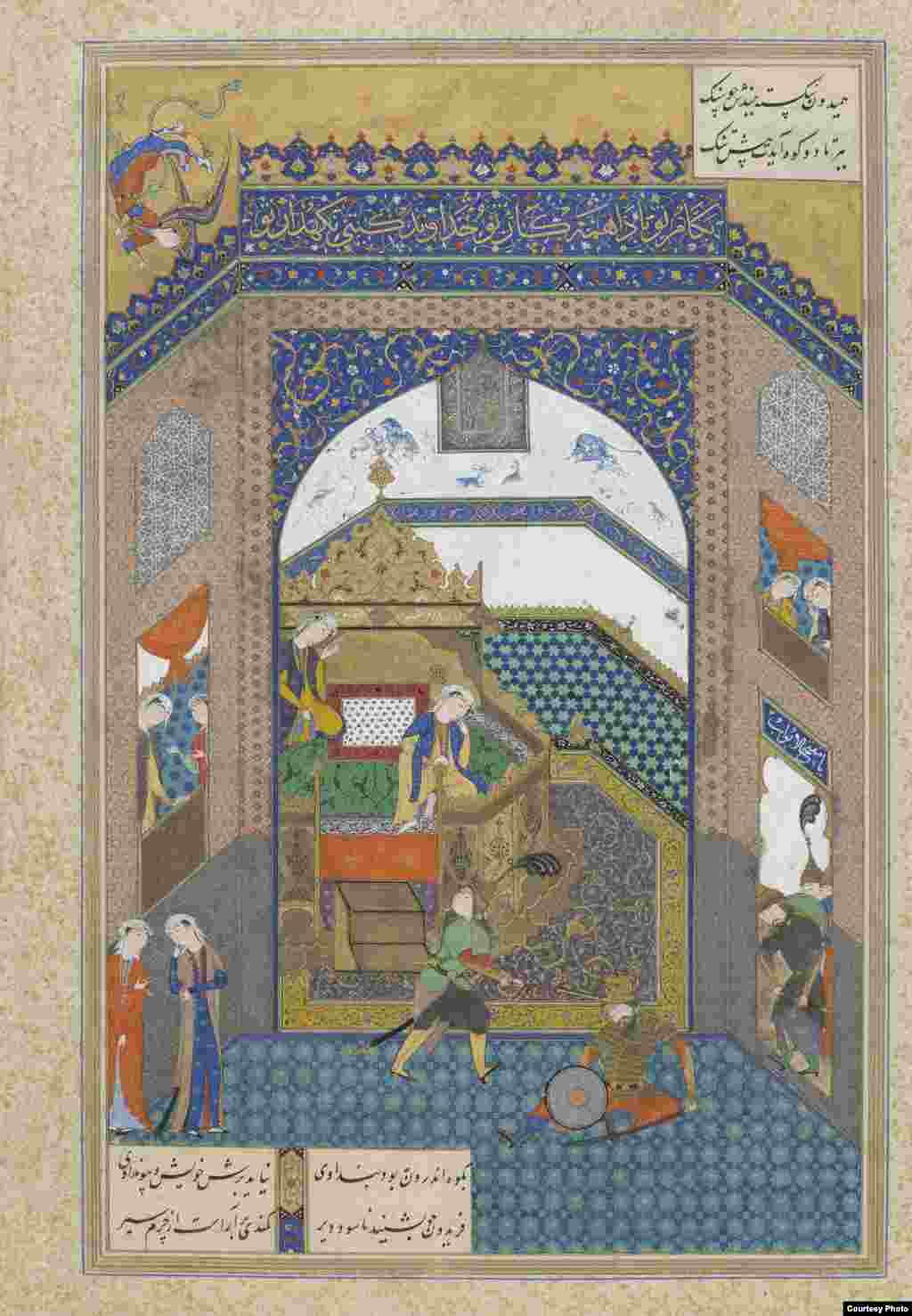
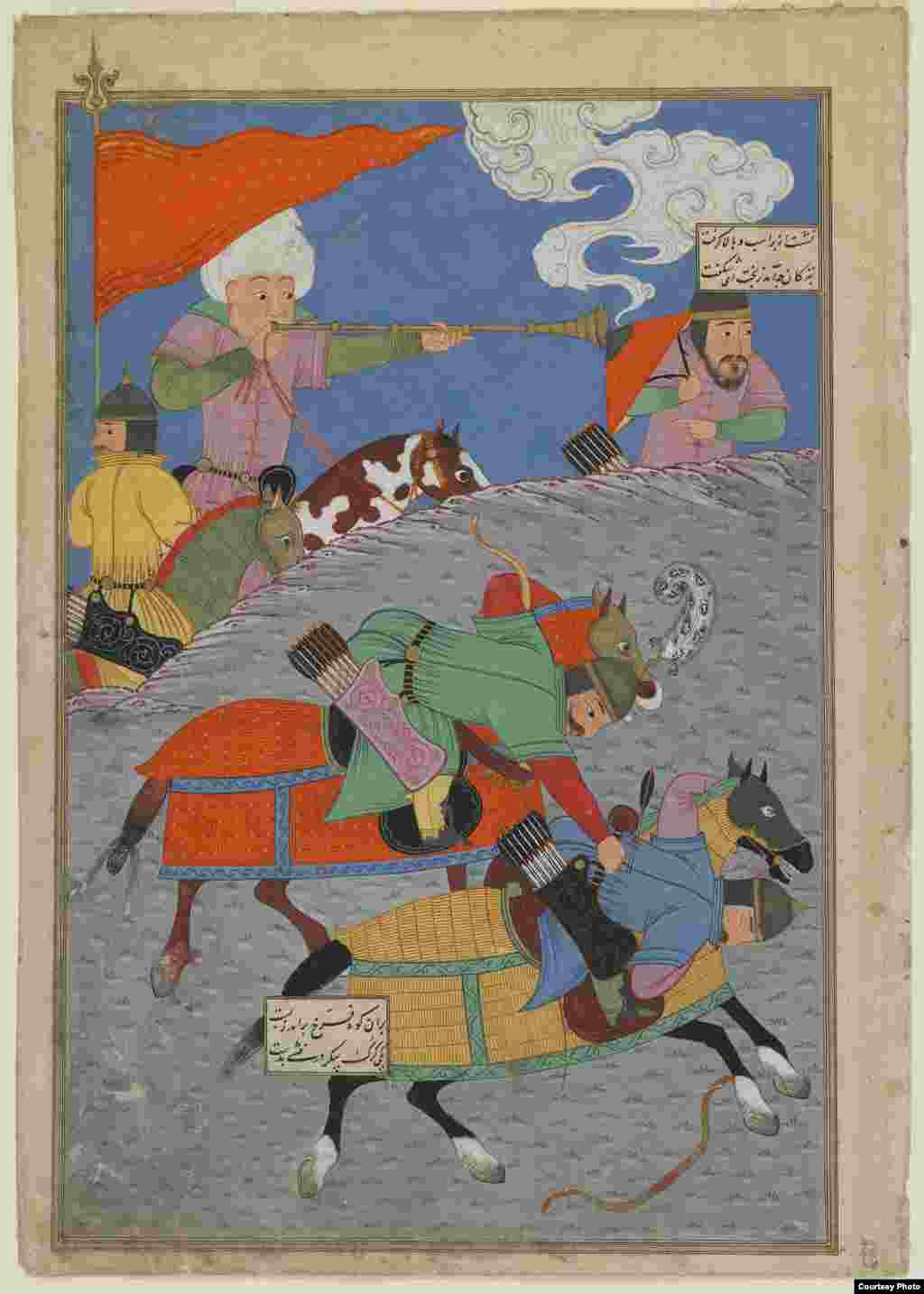
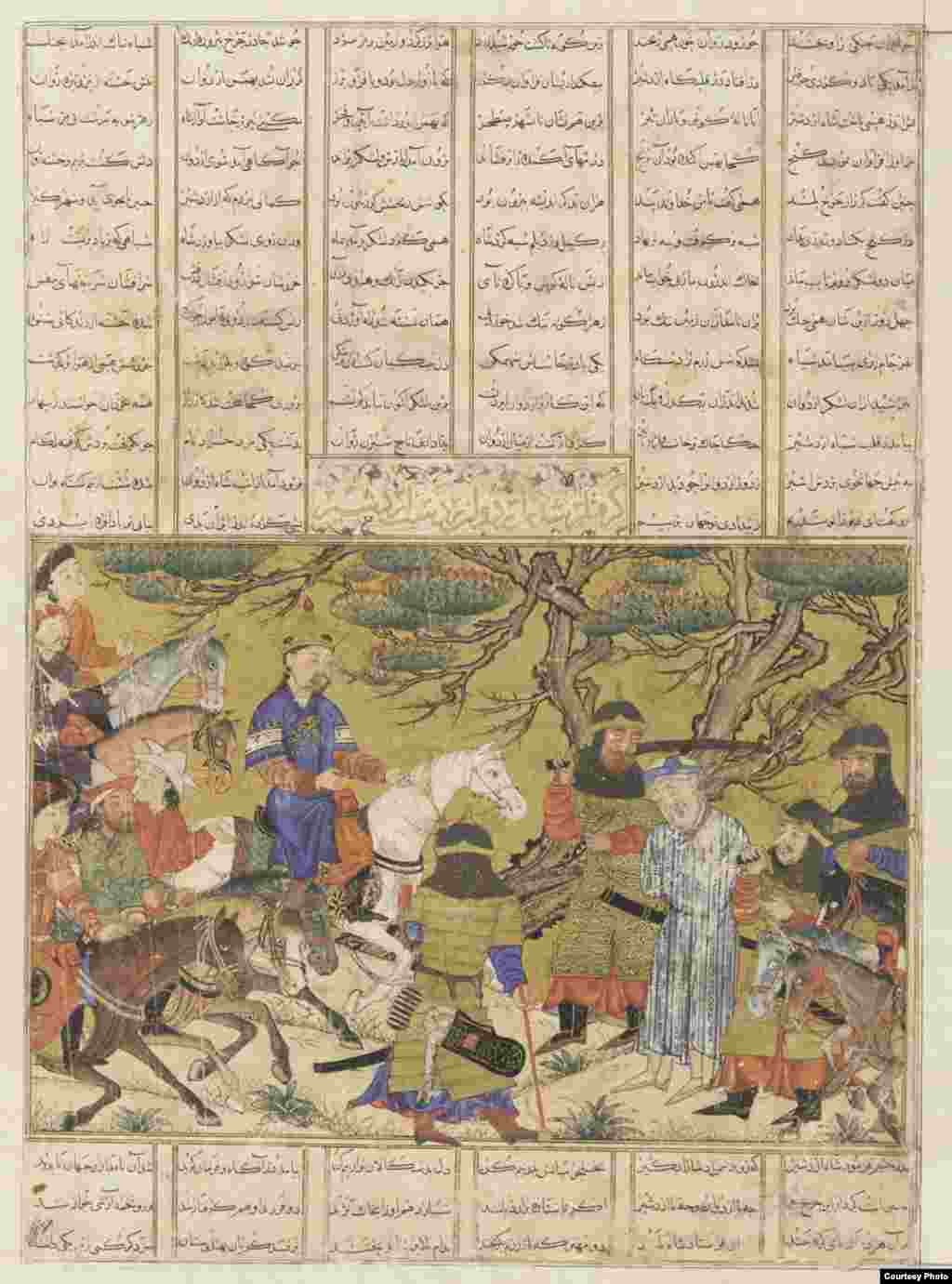
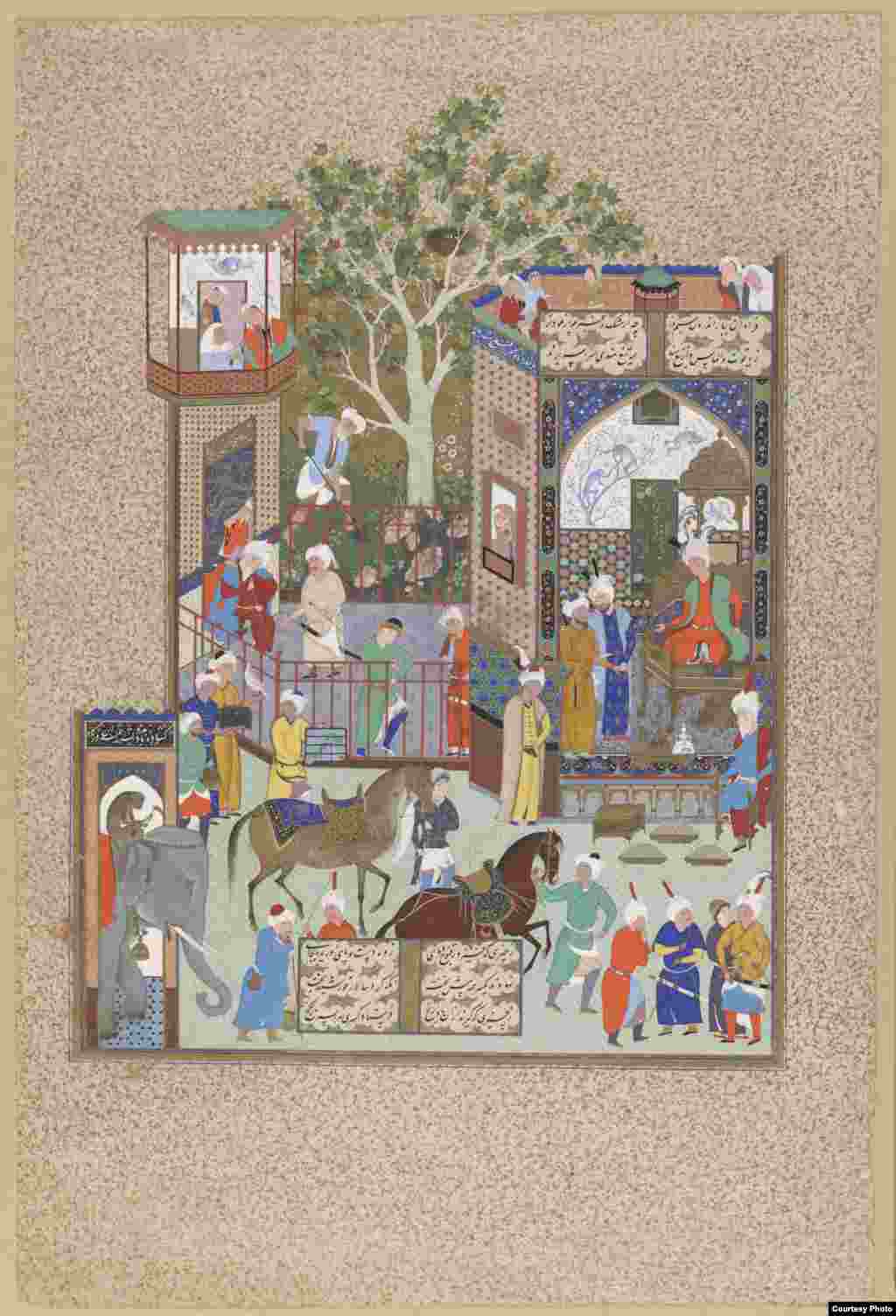
Яке аз онҳо наққошии эрониест, ки бо ранги равғанӣ соли 1518 кашида шудааст. “Тахтнишинии Каюмарс”, аз аввалин шоҳони Эрон ва раҳбари сулҳофарини ин сарзамин, ки 30 сол ҳукмронӣ кардааст. Дар нигораи дигар аз соли 1525 “Рустам ва Рахш” тасвир шудаанд, ки дар Табризи Эрон наққошӣ шудааст. Дар ҷо-ҷои ин тасвирҳо пораҳо аз абёти мондагори Фирдавсии бузург бо хати зарҳал дарҷ шудааст.
Exhibition Of Famed Persian Epic Opens At Washington’s Smithsonian Institution
1/8On October 23, the Smithsonian Institute in Washington, D.C., will celebrate the millennial anniversary of the Persian epic poem "The Shahnameh" or "Book of Kings" with an exhibit of 19 rare watercolors, along with two copies of the book and various metal artifacts depicting characters.
"Feridun Strikes Zahak With The Ox-Headed Mace," Tabriz, Iran, circa 1525, from "The Shahnameh" (Book of Kings) by Firdawsi
Photos courtesy of the Smithsonian Institute, Washington, D.C.
RFE/RL correspondent Richard Solash reports on an exhibit at Washington's Smithsonian Institution marking the millennial anniversary of the Persian epic "The Shahnameh" or "Book of Kings," composed by Abulqasim Firdawsi. The exhibit showcases rare watercolors from antique copies of the book.
2/8The evil King Kay Kavus before he is saved from demons by the epic's hero, Rustam.
"Kay Kavus Chained In A Grotto," Qazvin, Iran, circa 1576-1577, from "The Shahnameh" (Book of Kings) by Firdawsi
Photos courtesy of the Smithsonian Institute, Washington, D.C.
RFE/RL correspondent Richard Solash reports on an exhibit at Washington's Smithsonian Institution marking the millennial anniversary of the Persian epic "The Shahnameh" or "Book of Kings," composed by Abulqasim Firdawsi. The exhibit showcases rare watercolors from antique copies of the book.
3/8The opulent court of King Jamshid, who, as the legend has it, ruled for 700 years.
"The Court Of Jamshid," Tabriz, Iran, circa 1520s, from "The Shahnameh" (Book of Kings) by Firdawsi
Photos courtesy of the Smithsonian Institute, Washington, D.C.
RFE/RL correspondent Richard Solash reports on an exhibit at Washington's Smithsonian Institution marking the millennial anniversary of the Persian epic "The Shahnameh" or "Book of Kings," composed by Abulqasim Firdawsi. The exhibit showcases rare watercolors from antique copies of the book.
4/8In 1994, Iran traded a Willem de Kooning nude for hundreds of pages of the prized 16th-century copy of "The Shahnameh," pages of which are on display in the exhibit.
"Battle Between Zanga And Awkhast," Gilan, Iran, 1493-1494, from "The Shahnameh" (Book of Kings) by Firdawsi
Photos courtesy of the Smithsonian Institute, Washington, D.C.
RFE/RL correspondent Richard Solash reports on an exhibit at Washington's Smithsonian Institution marking the millennial anniversary of the Persian epic "The Shahnameh" or "Book of Kings," composed by Abulqasim Firdawsi. The exhibit showcases rare watercolors from antique copies of the book.
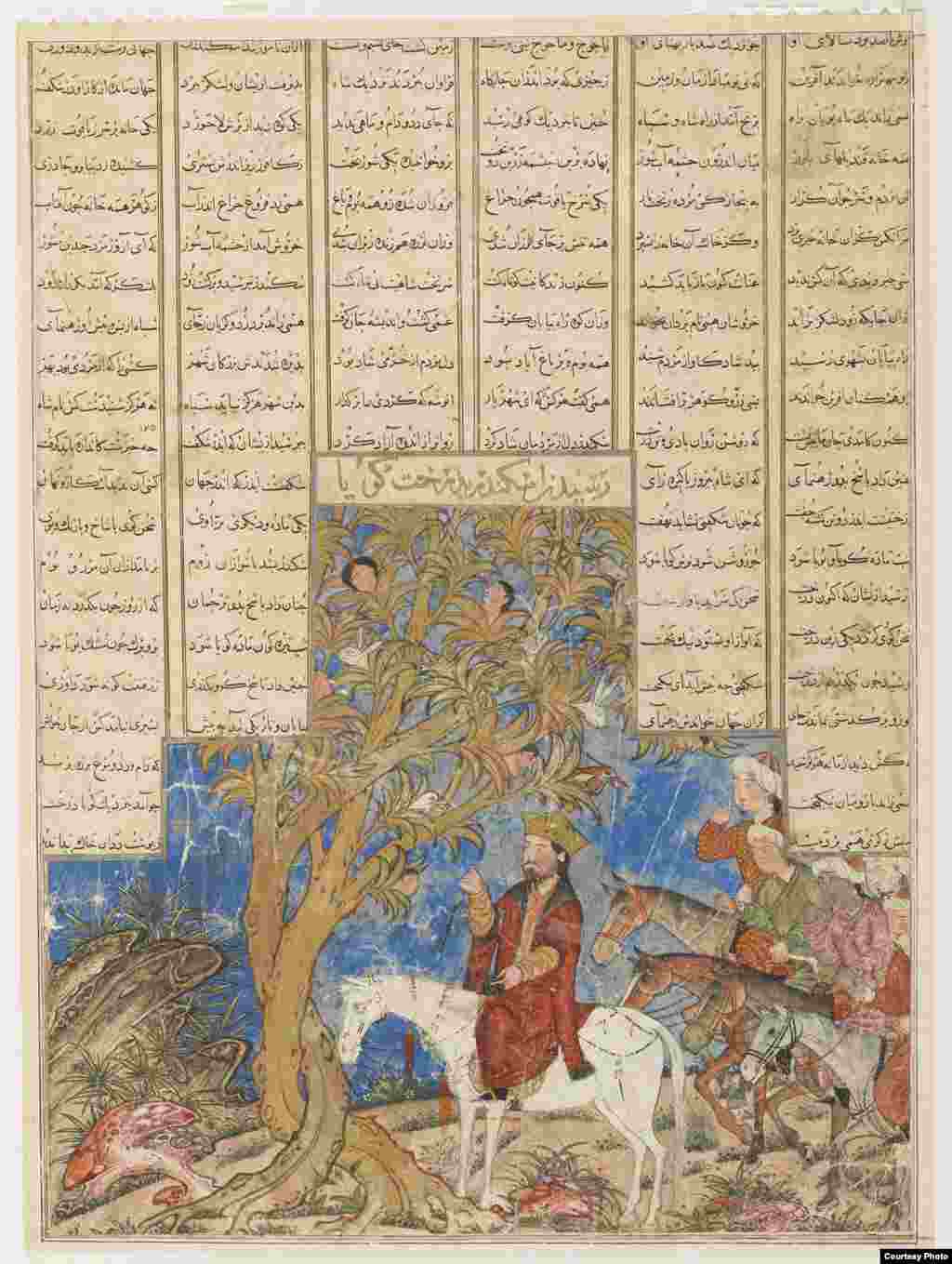
5/8A mixture of myth and history, the epic poem records the story of Persia from the beginning of time up until the 7th-century Arab conquest in more than 100,000 rhymed lines.
"Iskandar (Alexander the Great) At The Talking Tree," Tabriz, Iran, circa 1330-1336, from "The Shahnameh" (Book of Kings) by Firdawsi
Photos courtesy of the Smithsonian Institute, Washington, D.C.
RFE/RL correspondent Richard Solash reports on an exhibit at Washington's Smithsonian Institution marking the millennial anniversary of the Persian epic "The Shahnameh" or "Book of Kings," composed by Abulqasim Firdawsi. The exhibit showcases rare watercolors from antique copies of the book.
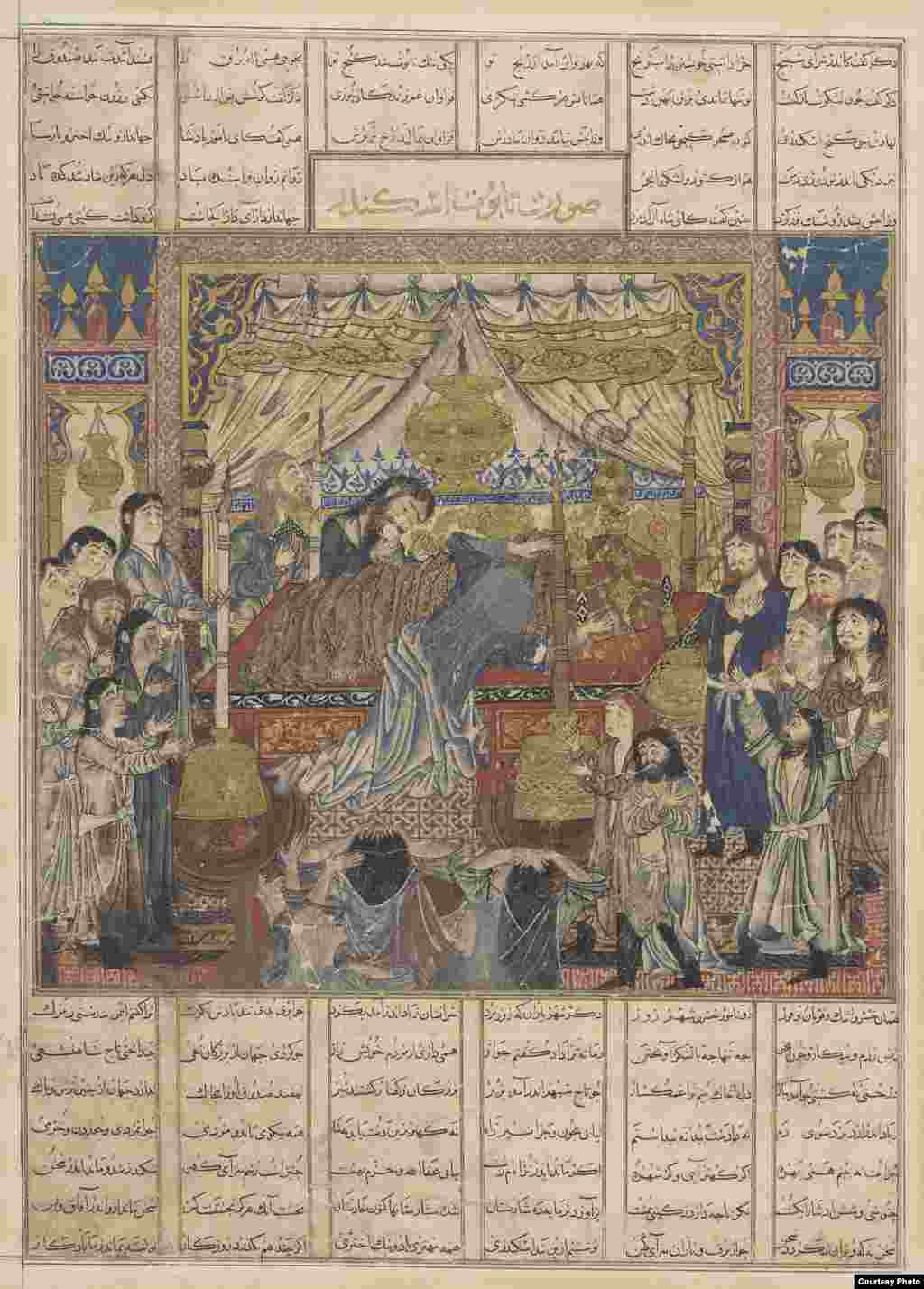
6/8The conquest of Persia by Alexander the Great features in the second part of "The Shahnameh," which is made up of three parts and called the "heroic period."
"The Bier of Iskandar (Alexander the Great)," Tabriz, Iran, circa 1330-1136, from "The Shahnameh" (Book of Kings) by Firdawsi
Photos courtesy of the Smithsonian Institute, Washington, D.C.
RFE/RL correspondent Richard Solash reports on an exhibit at Washington's Smithsonian Institution marking the millennial anniversary of the Persian epic "The Shahnameh" or "Book of Kings," composed by Abulqasim Firdawsi. The exhibit showcases rare watercolors from antique copies of the book.
7/8Magnifying glasses are provided to visitors to help them appreciate the extraordinarily fine detail of the miniature paintings.
"Ardashar Captures Ardavan," Tabriz, Iran, circa 1330-1336, from "The Shahnameh" (Book of Kings) by Firdawsi
Photos courtesy of the Smithsonian Institute, Washington, D.C.
RFE/RL correspondent Richard Solash reports on an exhibit at Washington's Smithsonian Institution marking the millennial anniversary of the Persian epic "The Shahnameh" or "Book of Kings," composed by Abulqasim Firdawsi. The exhibit showcases rare watercolors from antique copies of the book.
8/8Ferdowsi’s poem stops at the 7th-century Islamic conquest of Persia, probably, scholars says, because he ran out of time to record events beyond that point.
"Nurshivan Receives An Embassy From The Ray Of Hind," Tabriz, Iran, circa 1520s, from "The Shahnameh" (Book of Kings) by Firdawsi
Photos courtesy of the Smithsonian Institute, Washington, D.C.
RFE/RL correspondent Richard Solash reports on an exhibit at Washington's Smithsonian Institution marking the millennial anniversary of the Persian epic "The Shahnameh" or "Book of Kings," composed by Abulqasim Firdawsi. The exhibit showcases rare watercolors from antique copies of the book.